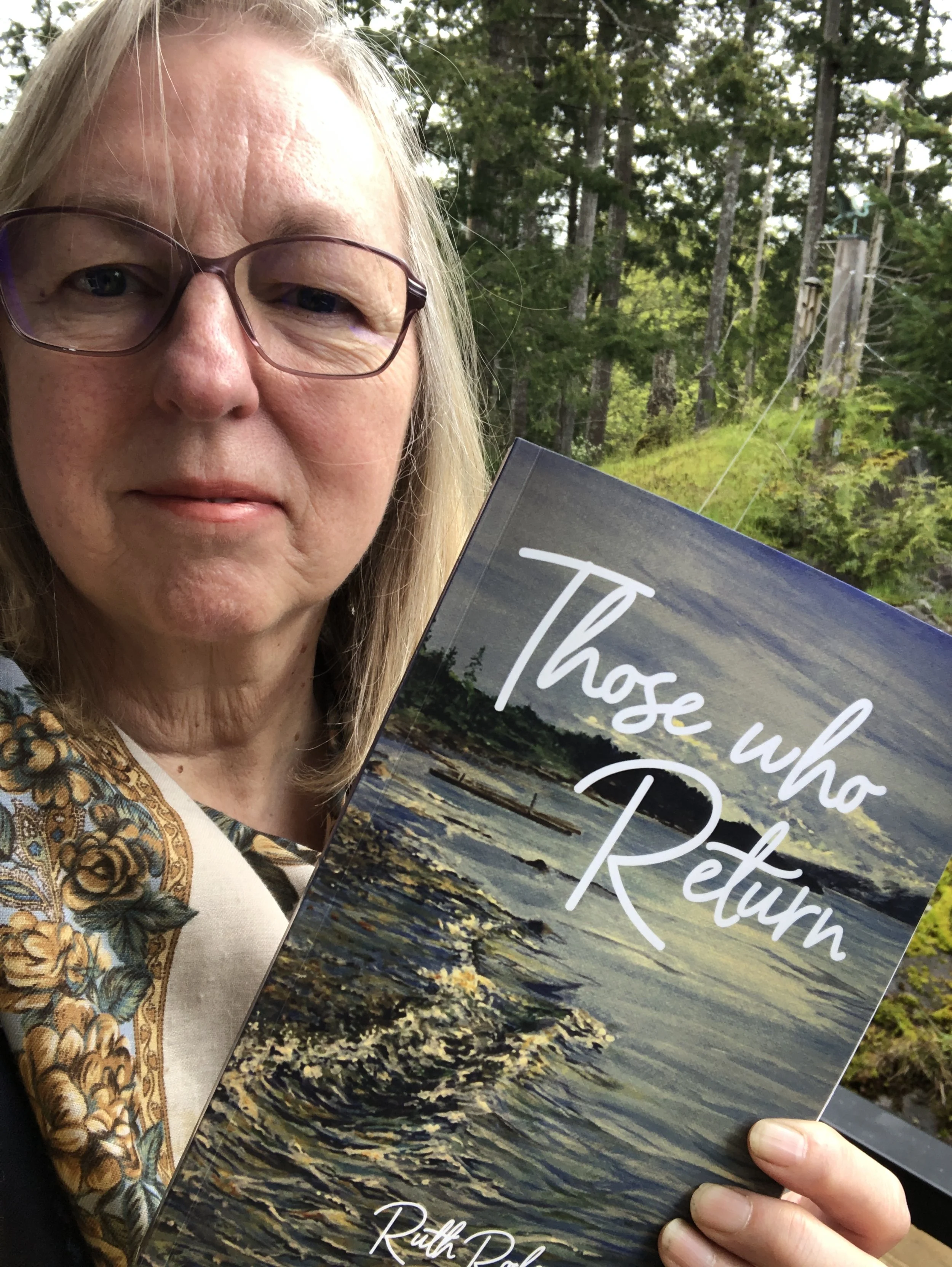
This is the third in my Sunshine Coast series, but can be read as a stand-alone book as well.
To explore the Japanese Canadian WWII experience further, I wrote Those who Return, which follows a family from Powell River as they are deported to a camp in the BC interior at Lillooet. One family member, however, avoids internment by hiding out in the woods, leading to a very different war experience. In the present day, a descendent searches for this missing uncle, uncovering family secrets along the way.
My books are available directly from me at my studio (contact me via email at rodgers.ruth@gmail.com), on Amazon (ebook available as well as print-on-demand), and at local bookstores here on the Sunshine Coast, BC: Talewind in Sechelt and EarthFair in Madeira Park.
“What a wonderful book! Through your thorough research and the characters you have created, you have explained the struggles of Japanese Canadians’ integration into Canada and the devastating impact of the war. I had so many feelings as I read: nostalgia, sadness, happiness, anger, hopelessness, and optimism. I feel that your book will help readers to a greater understanding of the diverse cultures in our world.” Doreen Campbell (WWII internee)
“Reading Those who Return felt like a journey back to my grandmother. As I read, I remembered many stories that she shared about her life including her time at Hastings Park and then the New Denver Japanese Internment Camp. Despite hardships, racism, and rejection, she had an unwavering loyalty and gratitude to Canada and an immense pride in being a Canadian citizen. Reading this book filled with such rich characters has helped me to understand her pride. Thank you for writing this beautiful book, Ruth.“ Michelle Smart
“Anyone interested in Canadian history should read this book. It has been a real revelation to me, an immigrant, that Canada treated the Japanese immigrants, many of whom were Canadian citizens, so poorly. The author weaves the story of three generations whose strength, resilience, and resolve are confronted by true national and international events beyond their control. It is a testament to how strongly families and communities can survive, and even thrive, against almost insurmountable conditions.” Chris Fliesser
“This book was a very emotional read. My parents seldom spoke of their experiences in Haney where they bought land, cleared it, and started a successful strawberry and chicken farm. The farm and equipment were all confiscated when they were relocated to the sugar beet fields of southern Alberta. My parents never expressed bitterness. There was a common Japanese saying ‘shikata-ga-nai’ which means ‘it can’t be helped.’ A successful future can’t be forged with hate. Through hard work, ethics, integrity, generosity, perseverance, humbleness, and kindness, we try to become worthy Canadian citizens.” Ken Oka