Abstracting a motif

For a recent lesson in pastel painting, I created an image based on an old photo taken on a trip to New Zealand. The painting is quite naturalistic, and conveys both the "reality" and the "feeling" of the scene and the event, and I'm quite pleased with it as a good example of my typical style.

The Sunlit Path pastel on sanded paper 14 x 21 unframed $500

The Sunlit Path pastel on sanded paper 14 x 21 unframed $500

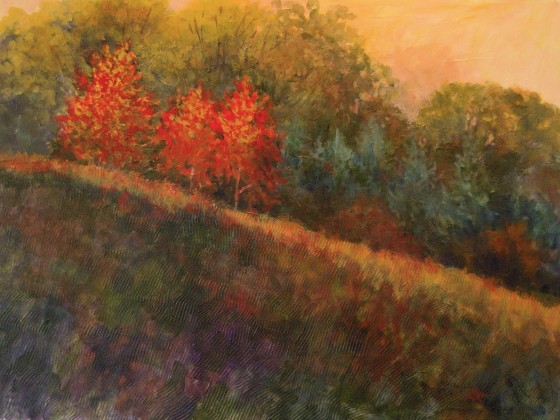
The following week, I gave a lesson in acrylic painting, and decided to explore abstracting the same motif in acrylic paint, primarily using a palette knife technique. I had a wide black deep-set frame I wanted to use, and a canvas to fit it, so I chose this exercise to match the drama of the frame.

This time, although the composition is the same, I pushed the colour palette by saturating the colours throughout and adding brighter accents. As in the pastel painting, I first created an underpainting in a range of pinks and purples, and left some of it showing through the final layers. I also simplified the shapes and strengthened the textures. Using the painting knife in various orientations, I created wide flat swathes of colour contrasted by fine linear accents, and used a rubber wood-graining tool to generate more grass-like textures in some areas.

Nearly There acrylic on canvas 20 x 24 framed $750

Nearly There acrylic on canvas 20 x 24 framed $750


The result is not as typical of my style, but I like the effect just as much as the more naturalistic pastel. Which work is "better"? The question only has meaning in a subjective sense.  Both works are successful in terms of concept, composition, contrast, colour, and clarity. Each one expresses and fulfills my intent for the specific piece.  The only question for a collector is, "Which one do you like better?" And every answer is valid!

New membership: Federation of Canadian Artists

I am delighted to report that I have successfully navigated the jurying process to be accepted as an active member of the Federation of Canadian Artists.  This association provides a great promotional opportunity for me via their bricks and mortar gallery on Vancouver's Granville Island, where I hope to show more of my work on an ongoing basis.  I'm pretty pumped to be a member of a society that once counted Lawren Harris among its members! The FCA also provides a variety of other services, as follows:

OUR MISSION STATEMENT

The mission of the FCA is to advance the knowledge and appreciation of art and culture to all Canadians, offering education, exhibition and communication in the Visual Arts, and to support and promote emerging  to professional member artists.

WHO WE ARE

The Federation of Canadian Artists (FCA) was founded in 1941 by a group of Canadian artists, including the Group of Seven luminary, Lawren Harris. The FCA continues to operate as a registered not for profit society with members throughout the world and Chapters in Western Canada. The FCA is dedicated to raising artistic standards by stimulating participants to greater heights of knowledge and achievement by offering what is believed to be the first completely artists sponsored gallery in Canada.  The Federation Gallery is located on Granville Island, Vancouver, BC, featuring bi-monthly juried exhibitions of works by emerging and Signature members as well as two juried international shows held annually, Painting on the Edge and AIRS. The FCA also holds special collaborative shows with other art societies. An extensive education program which is open to non-members as well as members, offering workshops, classes, critiques and lectures in the fine arts media, with instruction by successful established artists who can help all artists to explore and develop their artistic interest and talent. Membership in the FCA is open to all who appreciate art.


2015_Active_Badge

Adding texture at the ground level

In recent pastel and acrylic lessons, we have been examining how to create texture in our paintings. While there are a variety of visual illusion techniques that can be used in both media, another option is to actually create 3-D texture at the ground or support level.  This technique can be used on both card/paper supports for pastel and on panel/canvas supports for acrylic. First, sketch the main shapes of your design onto your support in light pencil lines so that you can create different textures in different areas (grasses, mountains, water, trees, sky etc.). Use white gesso at its full strength (i.e. undiluted, out of the jar or bucket, not the thinner pourable kind) and a cheap paintbrush of an appropriate size for your size of support. Brush on a small area of gesso at a time, keeping your eventual subject matter in mind in each area: in the sky area, you might stroke on the gesso fairly thinly and in flat horizontal strokes, blending well to avoid obvious texture; in a mountainous area, you might use thick random brushstrokes to indicate tumbled rocks and rough texture; for trees, brush the gesso into shapes resembling the direction and texture of the eventual foliage--you can create quite believable conifer foliage with upward flicks of the brush in a branching pattern. In grassy areas, consider using a wood-graining tool or a stiff comb to pull vertical strokes throughout the area--shorter in the background, longer as you move forward to create depth.  The wood-graining tool can be found in decorating stores--it's a small rubber triangle with different patterns of teeth formed into each of its three sides--wider, finer etc.. Nice to have, but a couple of cheap dollar store hair combs with thick and thin teeth--or even a fork!-- will also work. The trick is to apply the gesso with one hand (your dominant hand) and pull the comb through with your non-dominant hand before the gesso sets up.  This method will create somewhat random, natural-looking grassy texture. Using your dominant hand to do it tends to create more regular, stiff looking textures. Either way, remember to turn your wrist and hand to create strokes at varied angles, not all the same orientation. The thick gesso takes awhile to dry, but this can be sped up with a hairdryer if you are impatient! Don't start painting until it is completely dry in the thickest passages.

Once your textured support is totally dry, you can begin applying the first layer of paint.  Use a thin layer in the darkest value you expect to have in each area first.  In pastel, you can apply a very thin layer of pigment (you'll note that this rough-textured surface sands your pastel down quickly, so use a light pressure and a thin coat), then wash it down with rubbing alcohol or water to stain the surface.  With acrylic, thin this base coat with water and scrub it into the textures with a stiff brush.

Once the first staining layer is down, you can begin layering other colours on top, either brushing them deep into the textures or letting them sit on top of the raised parts. Just as when doing a rubbing of a 3-D object such as a brass rubbing, you'll see the textures emerging as you add layers.  Make use of them to create the illusion (and the actuality) of a three-dimensional object.

This technique is fun and effective, but shouldn't be overdone. Keep the textures subtle and let them work for you to enhance, not overwhelm, your subject.

Here are the two demo paintings I did for these lessons:
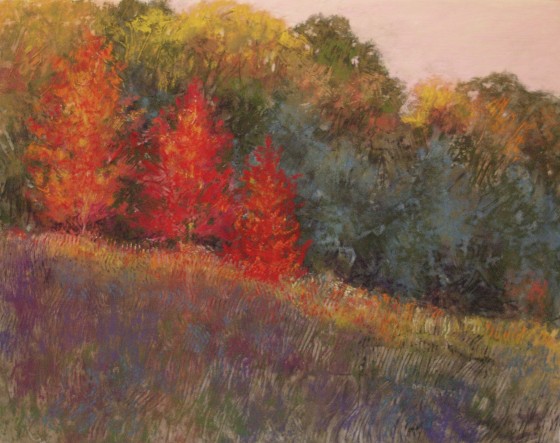
Three Redheads, pastel on textured matboard, 16 x 20

Roll Out the Red, acrylic on textured panel, 18 x 24

Waving Hello and "Goodbye"

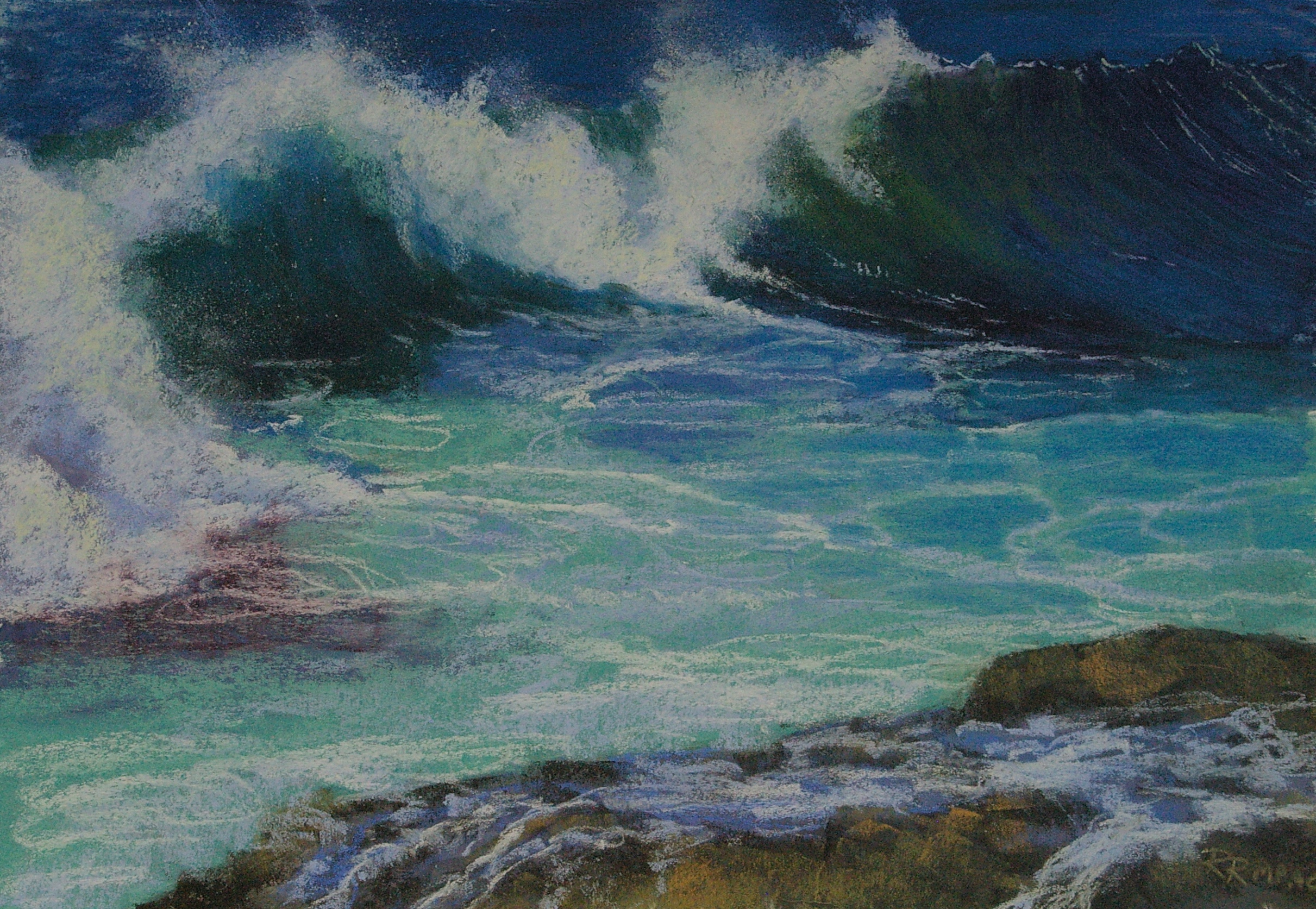
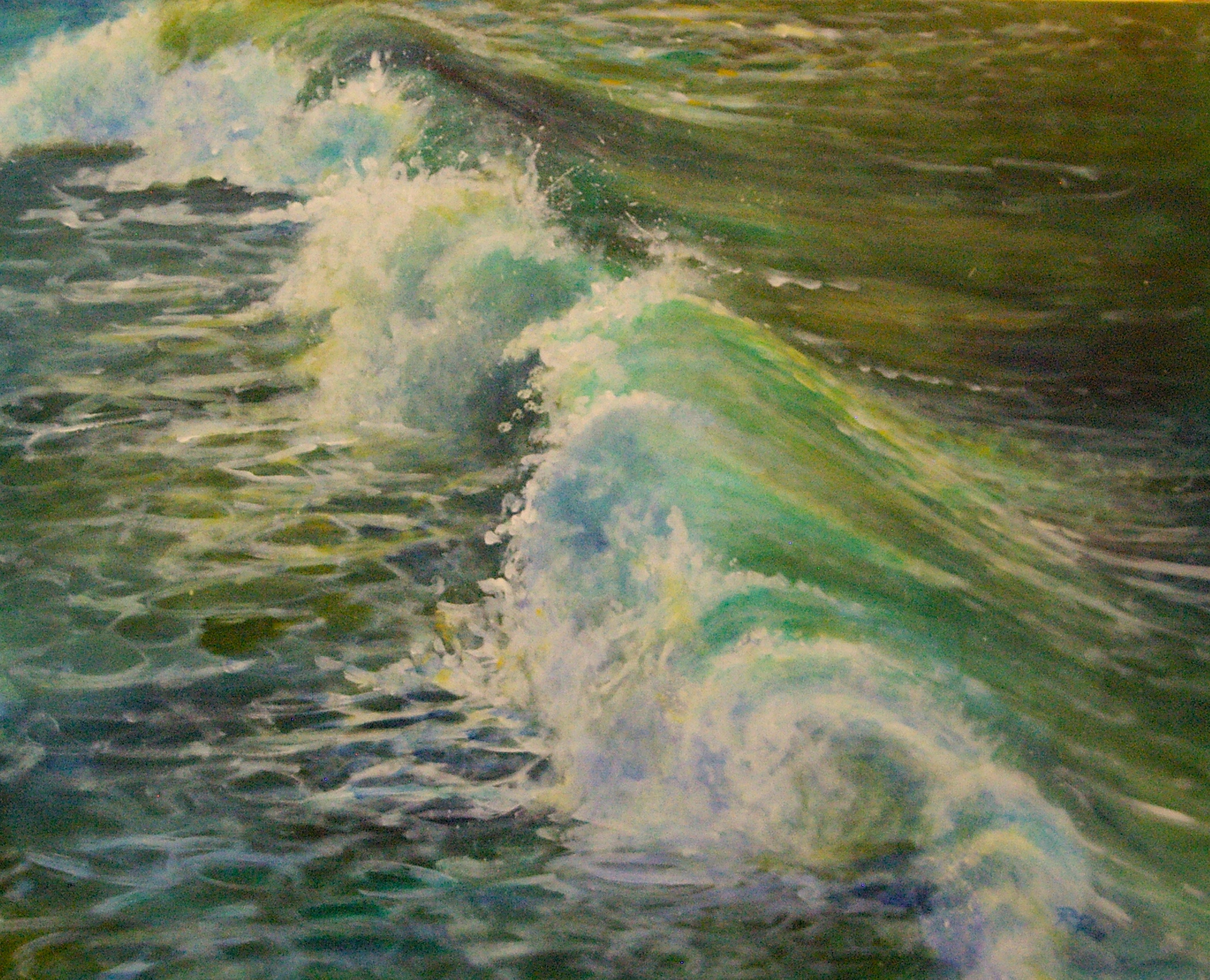
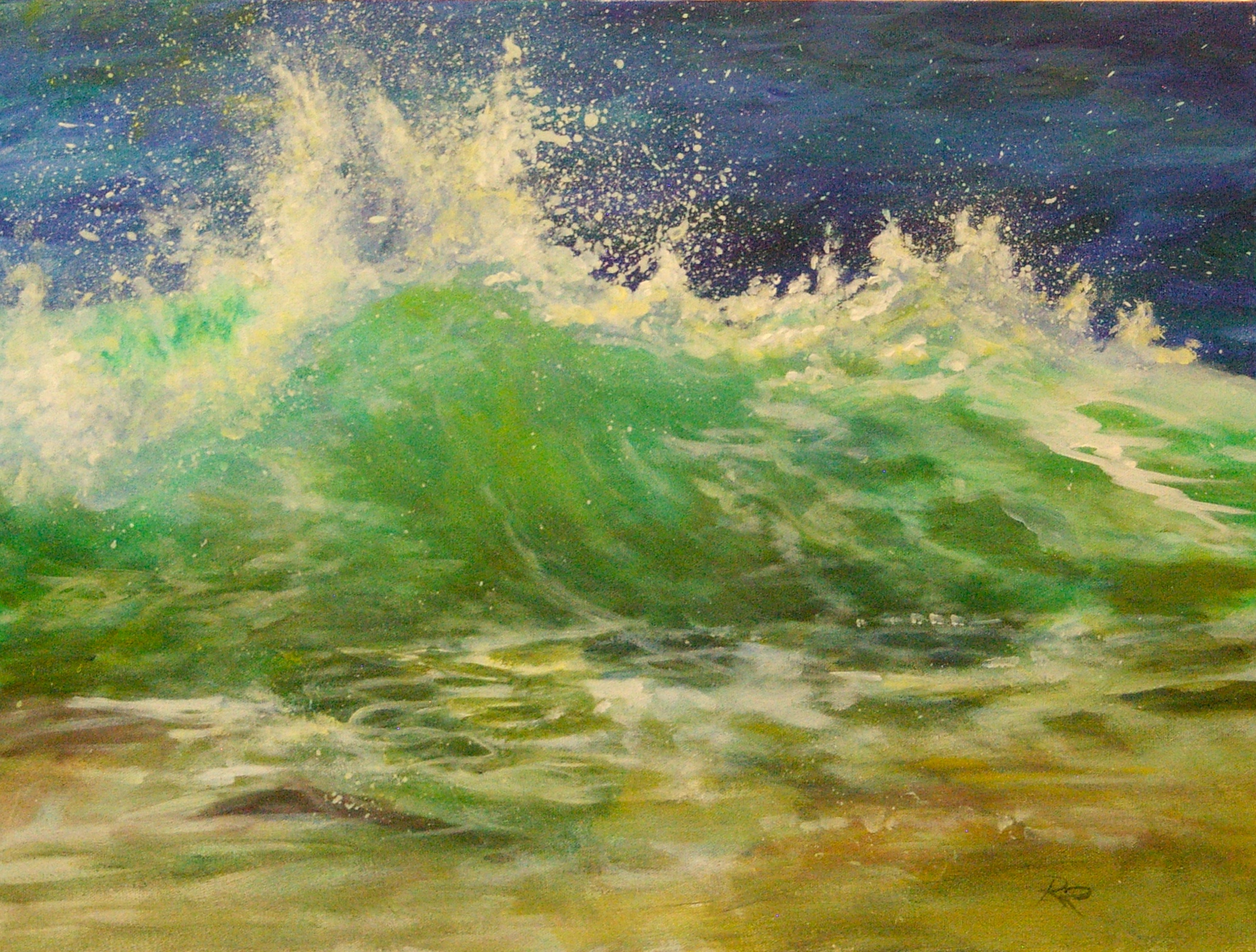
While at the International Association of Pastel Societies (IAPS) conference in Albuquerque N.M. in early June, I attended a wonderful hands-on workshop taught by Jeanne Rosier Smith ( http://www.jeannesmithart.com/gallery5.htm), an artist whom I have admired for some time for her fresh, evocative paintings of waves. I was delighted to discover that Jeanne is also an articulate and skilled instructor, and even more pleased to find that, following her demo and directions, I was able to create two lovely pastels of waves myself, this being my first one... IMGP7670

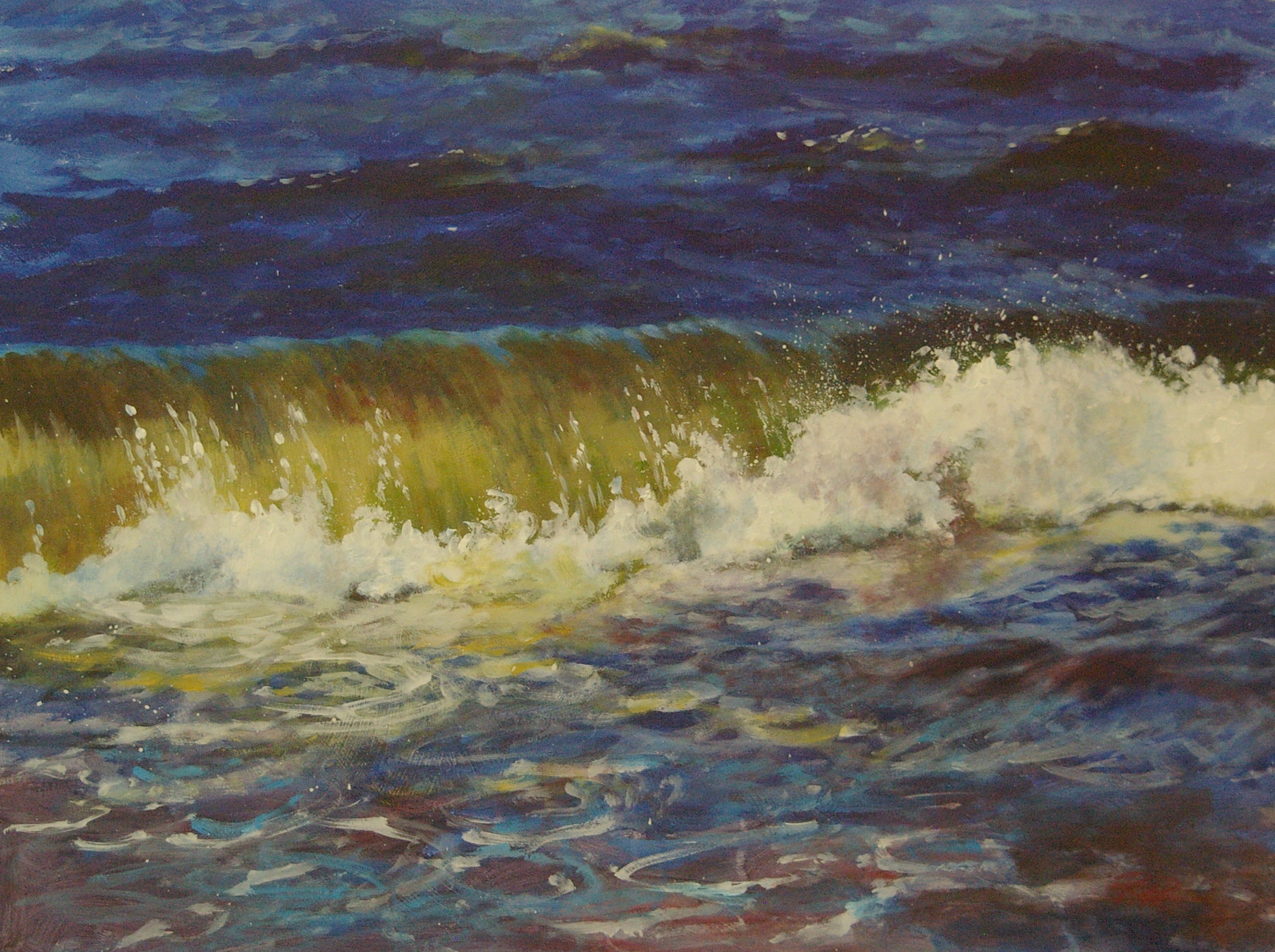
Ever since, I've become obsessed with painting waves in both pastel and acrylic, and am now in the process of trying one in "thread painting" (a technique similar to quilting that substitutes finely cut textiles for paint).  In fact, I've decided to focus my fall solo show at the Gibsons Public Art Gallery (opening Oct 15, 2015) on depictions of water, including lots of waves. Some of them can already be seen at The Landing Gallery in Gibsons Landing, B.C.

Here are some samples so far:

IMGP7665 IMGP7668 IMGP7671 IMGP7673 IMGP7675 IMGP7678 IMGP7680 IMGP7682 IMGP7685

On another note, I will soon be moving my website to another platform. The address will stay the same, but the hope is that it will be cleaner, easier to navigate and manage, and, of course, more attractive!  I'll let you know when the move is coming--stay tuned.

Pastels in the Landing

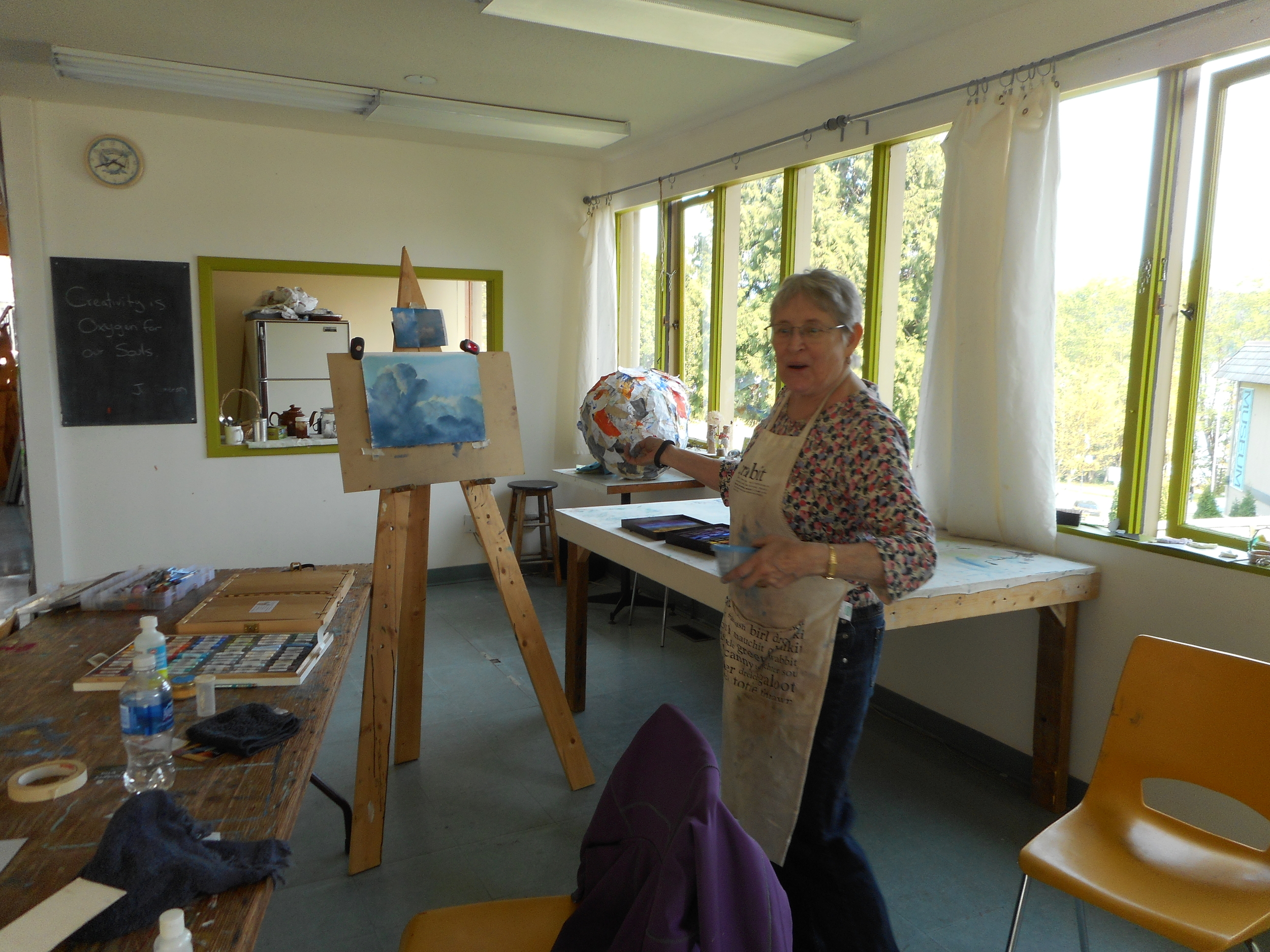
Three of us enjoyed a wonderfully peaceful but productive time last weekend in the spacious and well-equipped Arts Building in Gibsons Landing. My students Camilla and Valerie each completed two beautiful works, and were indulgent with me as I did a couple of small paintings myself!  The sun shone, the breezes blew, and we were happily and fully engaged in the creative process--heaven! Thanks also to Lauren Hemnes for her administrative help, and Georgina Brandon for inviting me to teach in this location. Valerie painting towering clouds on day one.

Camilla hard at work on her very first pastel painting ever.

Sorting pastels onto the colour wheel to learn about hue, value, and temperature

Valerie and her beautiful rendition of Merry Island!

Camilla and an inviting shoreline scene!