Seasonal Palettes

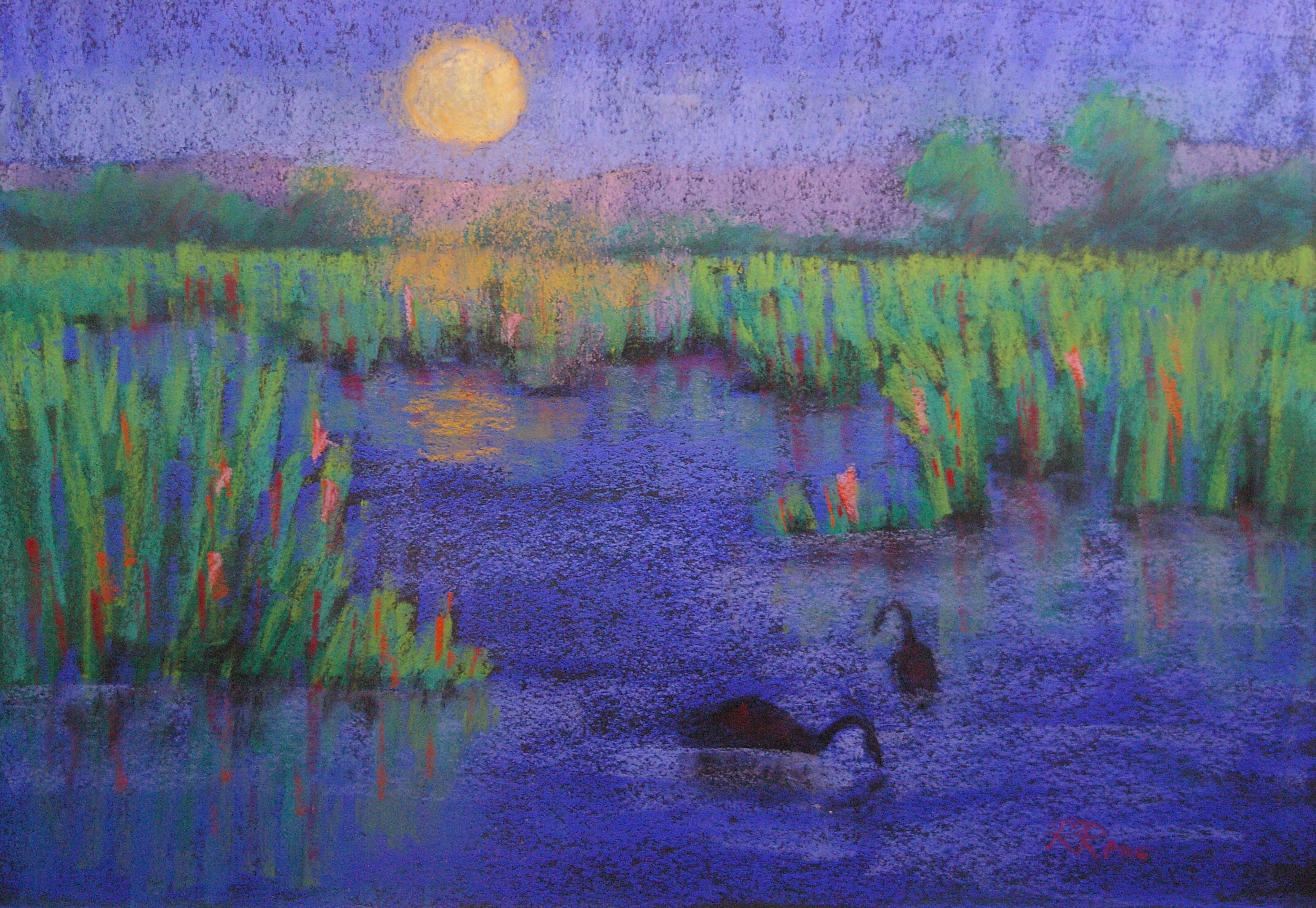
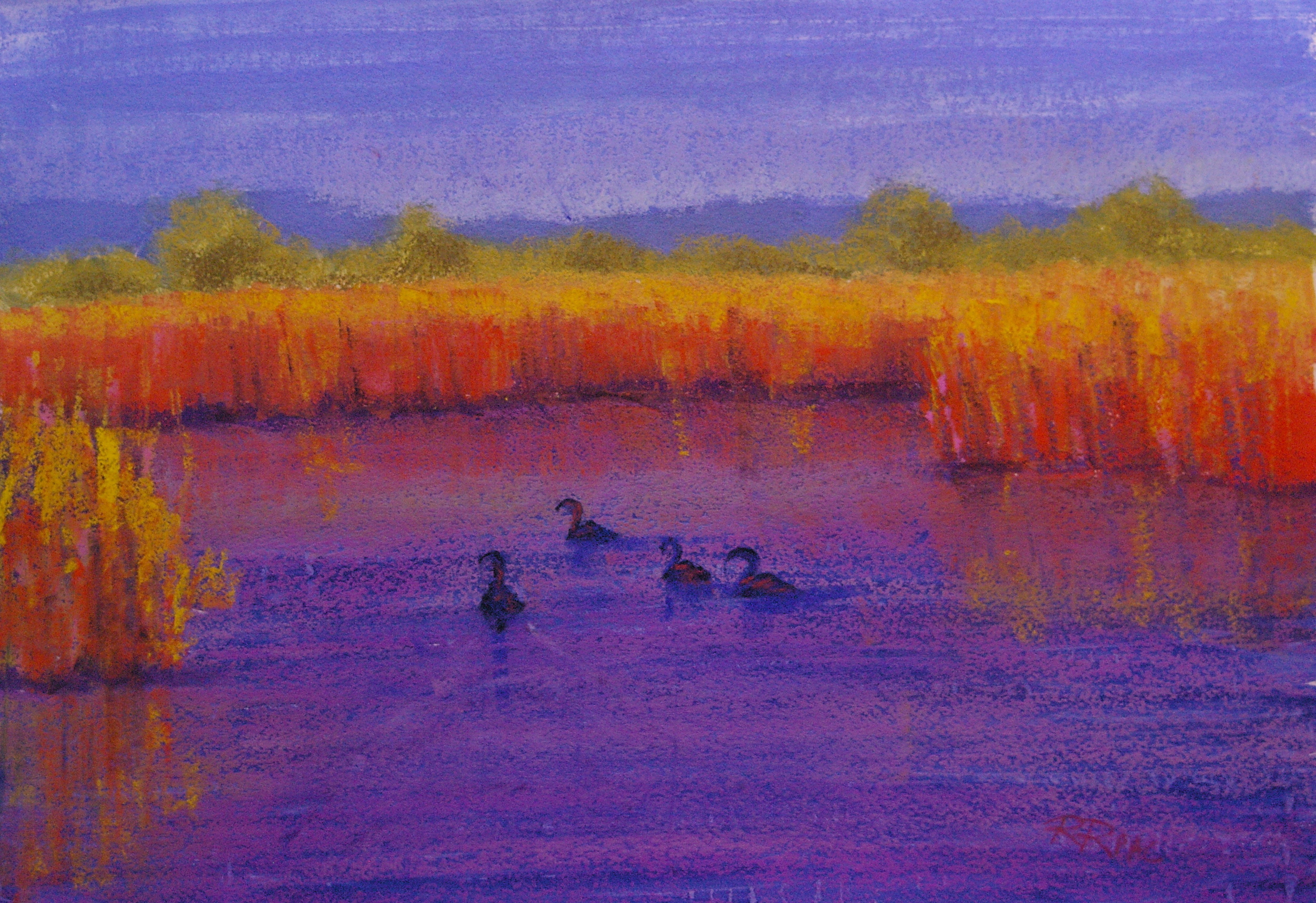
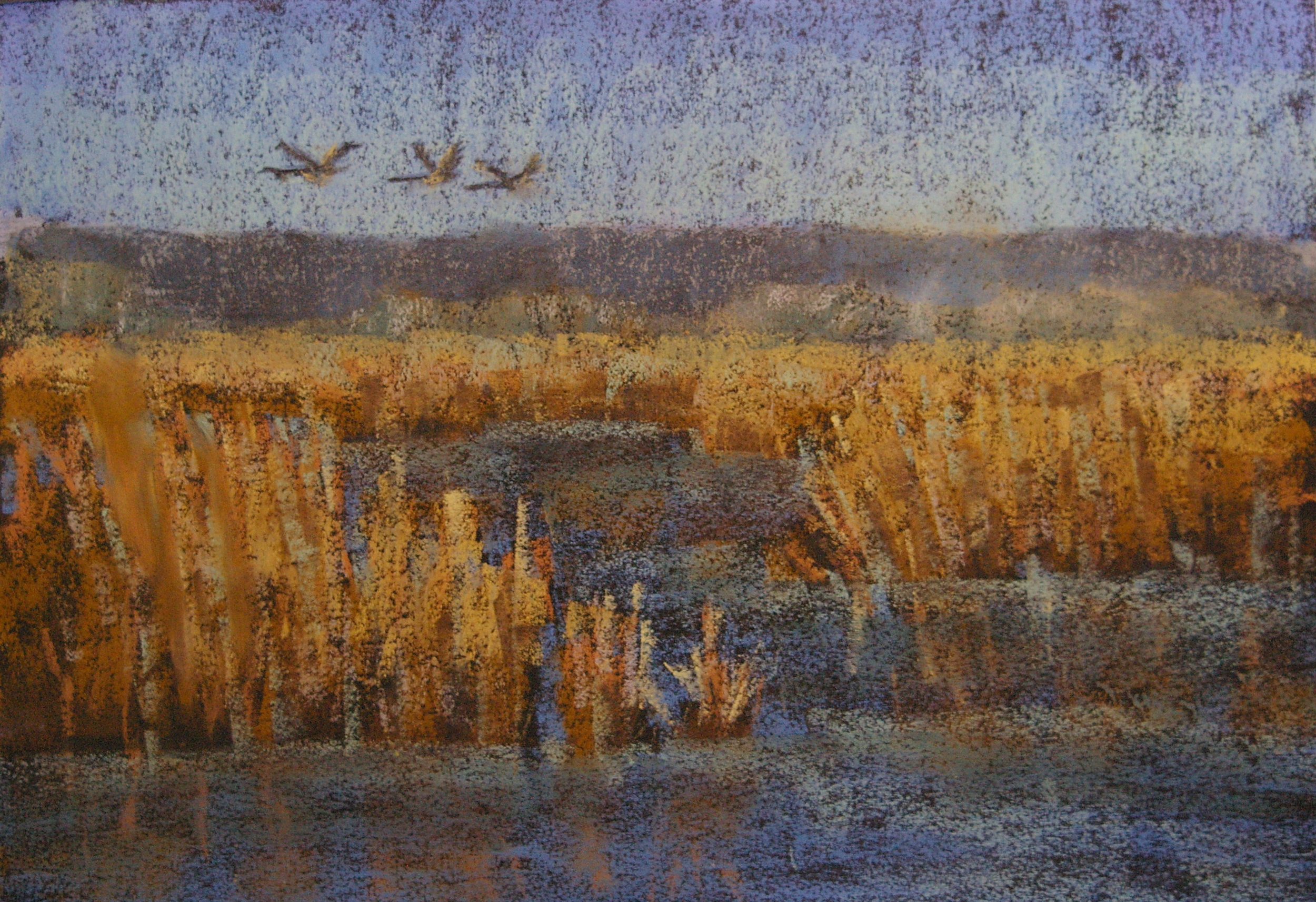
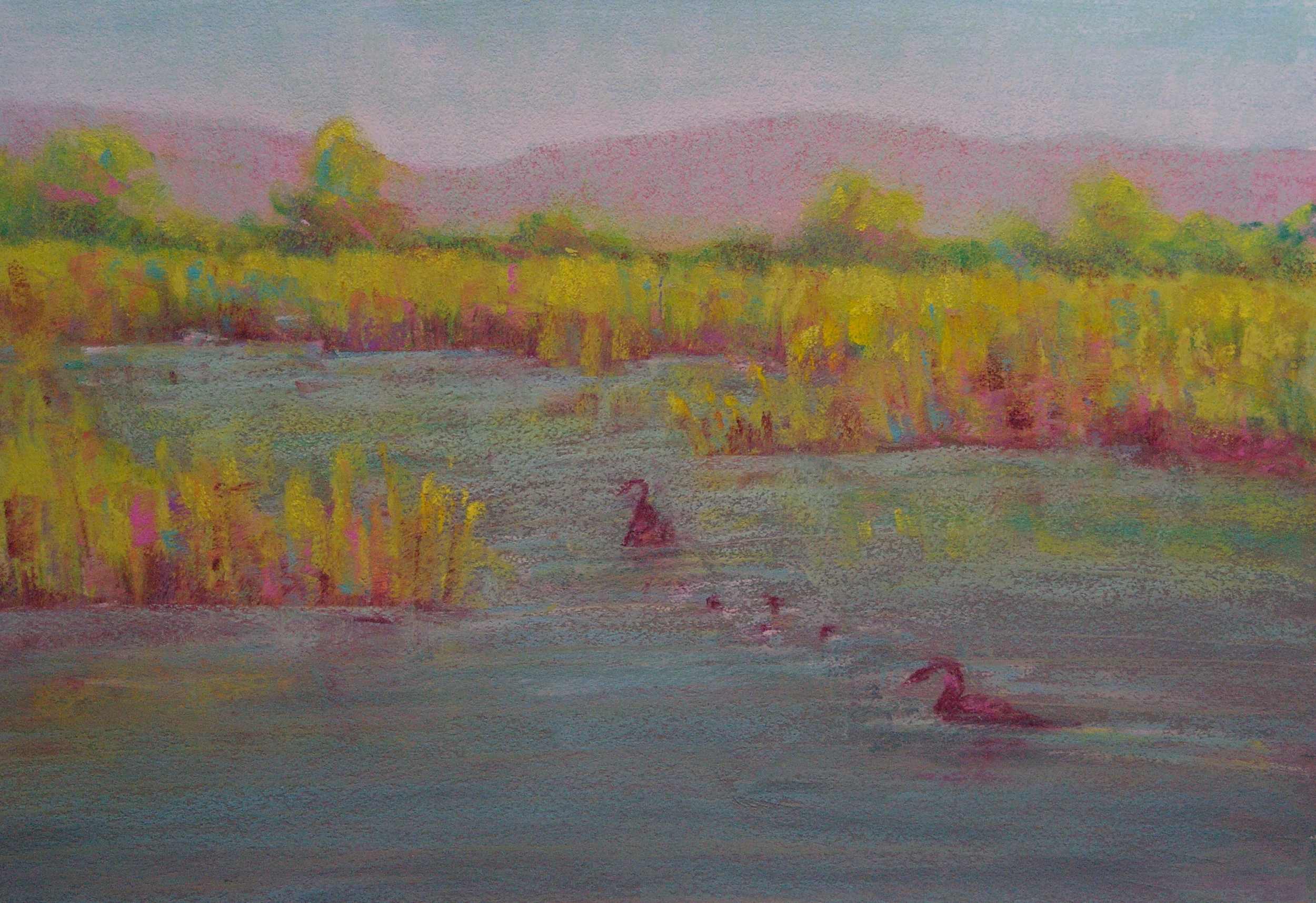
I've just spent two months in New Zealand, painting up a storm--watch for a new gallery on the website soon!  In the meantime, however, I wanted to do a post about an experiment I tried while away. Near Lake Taupo on the North Island, I took a photo of a lovely scene of a marsh, with black swans floating serenely in the water.  The composition was strong and simple, and I decided to have some fun by painting it four times, changing the palette of the work each time to reflect a different season, an exercise recommended by both Richard McKinley and Elizabeth Mowry.  Of course, in New Zealand they actually don't have a "real" winter with ice and snow, but this scene could have been anywhere because it had nothing identifying it as specifically South Pacific.

Below are the four paintings. Summer and winter are painted on black paper; fall and spring on white paper.  It's amazing the difference a different palette makes to the mood of a scene.  The summer picture was not intended to be a night scene, but when I saw the effect of the brilliant colours on the black paper, I couldn't help but think that it looked like a moonlit night in midsummer, so I added the golden orb of the moon to the sky and imagined a flood of light from it over the marsh and in the water.  A fun exercise!

Oil’s well that ends well

Recently I've purchased a number of excellent videos through North Light, including three of pastelist Richard McKinley. His two recent ones are excellent, but the one I want to mention here is an older one entitled "A Studio Session with Richard McKinley." In this 3 hour, 2 disk DVD, Richard is shown completing an entire painting from concept to final touches, and along the way he explains a myriad of critical concepts including simultaneous contrast. The painting Richard completes in this session makes use of a thin oil wash underpainting, and I really like the resulting serendipitous splatters, runs, and textures. This week I was reviewing older photographs for inspiration, and came across a photo that featured a narrow trail between rough low bush, spattered with snow. The textures reminded me of those on Richard's oil underpainting, so I thought I'd give the technique a try.

Richard emphasizes that the underpainting is simply a set-up for the pastel, and encourages you to paint dark where you plan to add light pastel, light where you want to add dark pastel , warm under cool, and cool under warm. It's almost like painting a "negative" underneath the planned finished painting--which takes some thinking and planning, let me tell you!

Here is the resulting underpainting, using VERY thin oil washes (thinned with Turpenoid) on white Dianne Townsend sanded paper. I didn't stretch the paper first, but it didn't buckle or warp with the washes, and they dried within about 30 minutes. In the foreground, I dabbed additional Turpenoid onto the washes shortly after applying them, as I wanted additional runs and textures to appear. The paper was set upright on the easel to enable gravity to affect the paint runs.

Once the underpainting was thoroughly dry, I began to gently and slowly apply pastel, trying to respond to the existing textures and add only enough strokes to bring my concept into focus. In the final painting, much of the evergreen trees and distant bush/treeline is still the oil underpainting. The foreground has been made more textured with the addition of thin lines of pastel (made by repeatedly tapping the crisp edge of square Terry Ludwig pastels across the surface, which gives a more natural effect than "drawing" the lines). The snowy path has the most opaque application of pastel, particularly at the distant focal point, where I wanted the effect of warm sunlight on dense snow. On the left, near the big trees, the snow effect is made by simply dragging a medium blue pastel on its side across the underpainting, allowing some texture below to show through to suggest a thin layer of snow over scruffy underbrush. You'll note that I discarded the idea of the leafless tree silhouette against the skyline, simply covering it over with the pastel I used in the sky. I think the pale blue pastel over the warm gold underpainting gives a nice glow.

I enjoyed using this technique, and will definitely try it again soon.

Fun with Acrylics

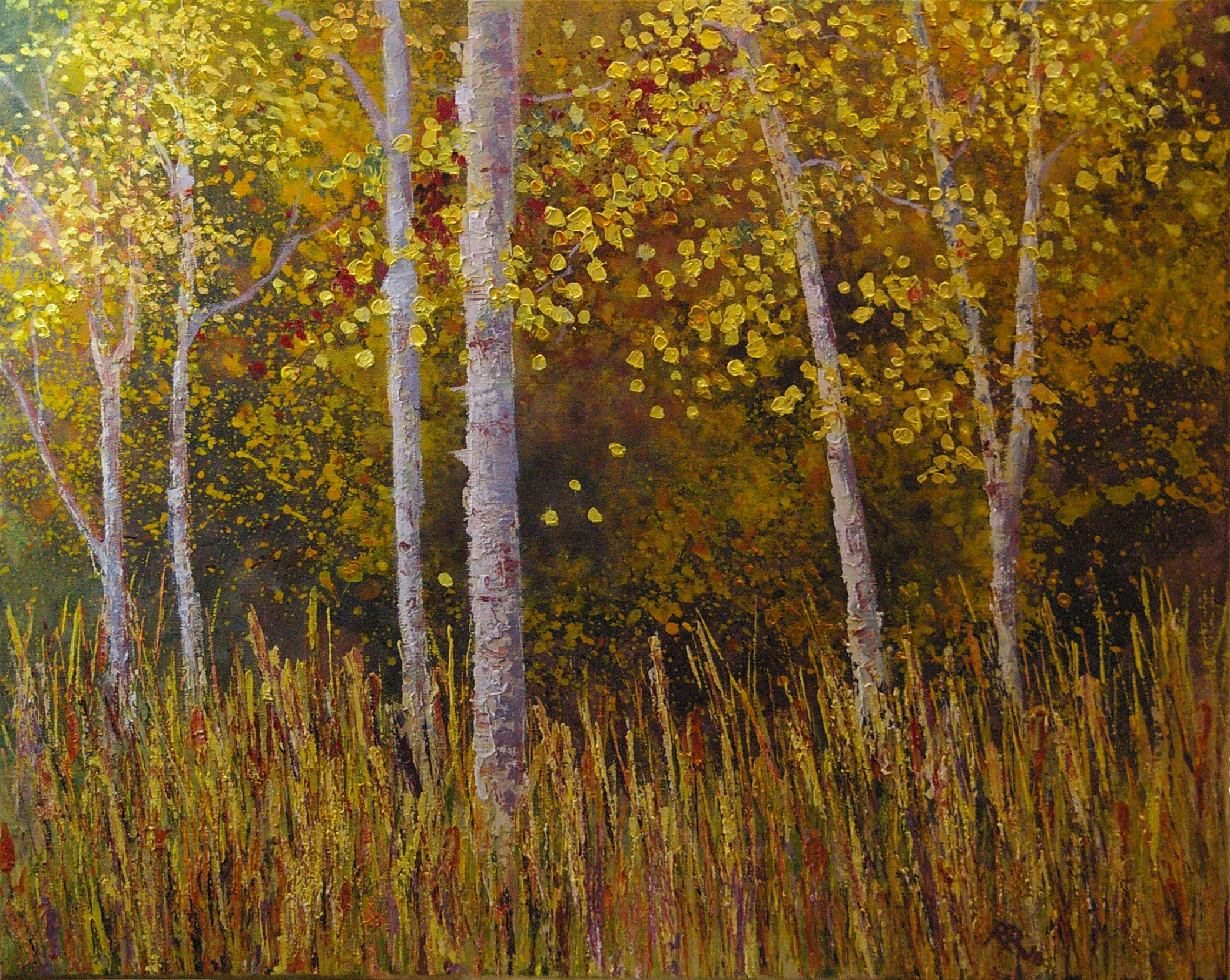
For a change of pace, I recently took an acrylic painting class from local artist Kebbie Gibb. Kebbie's teaching style is extremely organized and helpful, and during this short course she walked the class through both foundational painting principles and the many uses of acrylics. New to me were the various mediums that are available for use with acrylics, and I had great fun experimenting with flow medium, gel mediums, and modeling pastes. The painting below (titled The Goldrush) combines all these new techniques: I painted the background very thinly using flow medium, spattered paint mixed with gel medium for the smaller leaves, and used a painting knife with heavy body acrylics for the birch trunks, grasses, and the larger leaves. This experimentation has opened up lots of new possibilities! I'm sure I'll never abandon pastels, but painting with acrylics allows for a bolder, more textured approach that suits some subjects very well, and is lots of fun to paint.

Looking Forward, Looking Back

After 23 years in one location, it is time to move on. Many factors figured in the decision, and it was a difficult choice, but we have left behind our lovely cloistered home in the trees, and moved to a new home on a wide open waterfront. It's a culture shock, to say the least, but there are many things to enjoy, including sunrises over the marsh, the call of loons, the huge skies, the ballet of swallows, the pleasures of planning and planting new gardens, and, a new, larger studio! The new house is built into a hillside, so the lower floor is at ground level at the back (water) side of the house, providing a lovely walk-out to the lake edge from the new studio. It's a bigger, brighter space, and can accommodate up to five painters at once, so private lesson plans are in the works for the fall. It's an exciting new development, and I'm looking forward to a new adventure with it.

Another new development is that, on the basis of viewing my current exhibit at the Bowmanville Library, the manager of A Gift of Art in Newcastle has invited me to join her gallery, so my work will soon be available there, as well as continuing at Meta4 Gallery in Port Perry, and Davis Canadian Arts in Stratford. As well, I hope to join Bonnie Thomson in her studio on the Port Perry Studio Tour next spring--stay tuned for more news on that.

It's symbolic that the first painting I completed in my new studio was a work commissioned by the new owners of my previous home. It is of the view from their previous home, and it will hang in my previous home, so there is a sense of connection and appropriateness to the whole sequence. See the finished work below.

The French Connection

When the letter came, I knew it was a chance of a lifetime: an invitation to study with internationally-renowned pastelist Elizabeth Mowry for a week in Giverny, France, the home of Monet’s famous garden.  I had very much enjoyed a week with Elizabeth in the Lot Valley in France several years ago, and so, despite the timing and finances being a stretch, I took a deep breath and told Elizabeth that I’d come!

First, I had a whirlwind tour of all the Impressionist paintings in Paris (the Louvre, the Musee D’Orsay, L’Orangerie, and the Marmaton) with four other women from the workshop (see the view--and so-called "second bathroom"-- from our Paris apartment,the Louvre, and a peek at the waterlily panels in L’Orangerie below).  My friend Lisa loved all the birds available at the market near Notre Dame, and we had great fun shopping for Parisian scarves and trinkets, once we mastered the Metro system. We enjoyed the many beautiful roses in Paris, the street musicians and puppeteers, crepes made on the street, and an unexpected meeting with old friends (see below)!

We also arranged a private visit with Isabel Roché of Henri Roché handmade pastels, where I and my travelling companions failed to exercise restraint in the face of so much temptation!

After four very packed days, we traveled through the countryside north and west of Paris to arrive at the village of Giverny, our home for the remaining time.

Our home for the week was a beautifully adapted old mill, Le Moulin des Chennevieres (above), where we shared quaint but comfortable rooms with evocative names such as “Poppy,” “Buttercup,” and “Sunflower.”  The mill, run by Stephanie and Gerard, provides wonderful food (breakfast on the terrace shown above!), and beautiful spaces to paint right on site, plus it is a mere 10 minute walk to Monet’s garden.

During the week, we had access to the garden five times, three of which were either before or after the regular tourist hours.  It was magnificent to actually experience firsthand the loveliness captured in so many famous paintings, and I took full advantage of each visit, taking hundreds of photos and working up a number of field studies for later development.

The village of Giverny itself is surprisingly uncrowded and charming given the daily onslaught  of tour busses, and we enjoyed seeing the tiny garden studio behind the Hotel Baudy, which the Baudy family built at the turn of the last century to host all the artists who followed Monet to their village—Cassatt, Robinson, and many others.

Another memorable Giverny experience was the viewing of a juried exhibition (Salon du Pastel) showcasing works by members of the French equivalent of Pastel Artists Canada, in which several of our friends from PSEC (Quebec) had works as well!  It was a delight to see the work of so many talented pastelists from another country, and some wonderful Canadian works as well.

I was especially intrigued by this pastel painting on what appeared to be plywood, with the support showing in almost half of the image--a novel approach!

One of the highlights, however, was the opportunity to paint in the poppy field behind the Impressionist Museum in the village, where local schoolchildren ran shrieking along the paths, bringing to life the famous Monet painting of Camille and Jean. An unforgettable sight, sound, and experience. Oh, and the food at the museum cafe was exquisite.

Day trips to nearby Vernon netted gorgeous veggies, beautiful clothes, and great table linens from the market, and glimpses of medieval churches with contemporary glass windows (replacing those lost in WW II bombing). Other than that, we whiled away the days finding new places to paint (and lounge beautifully!).

My time in France was well worth the cost and time—some experiences (and friends old and new) are priceless.